
In recent years, yoga has become more accessible than ever. From online classes and social media content to books and workshops, people across the world are discovering its transformative benefits. If your interest in yoga has evolved beyond simply watching videos or reading about it, the next natural step is to begin a consistent practice.
One of the most common questions among beginners is: What is the best time to practice yoga?
In today’s fast-paced lifestyle, finding time for self-care can be challenging. While yoga can be practiced at different times of the day, choosing the most suitable time depends on your goals, daily routine, and the nature of your practice. Understanding the significance of different periods of the day can help you create a sustainable and effective yoga routine.
Understanding Yogic Time Cycles
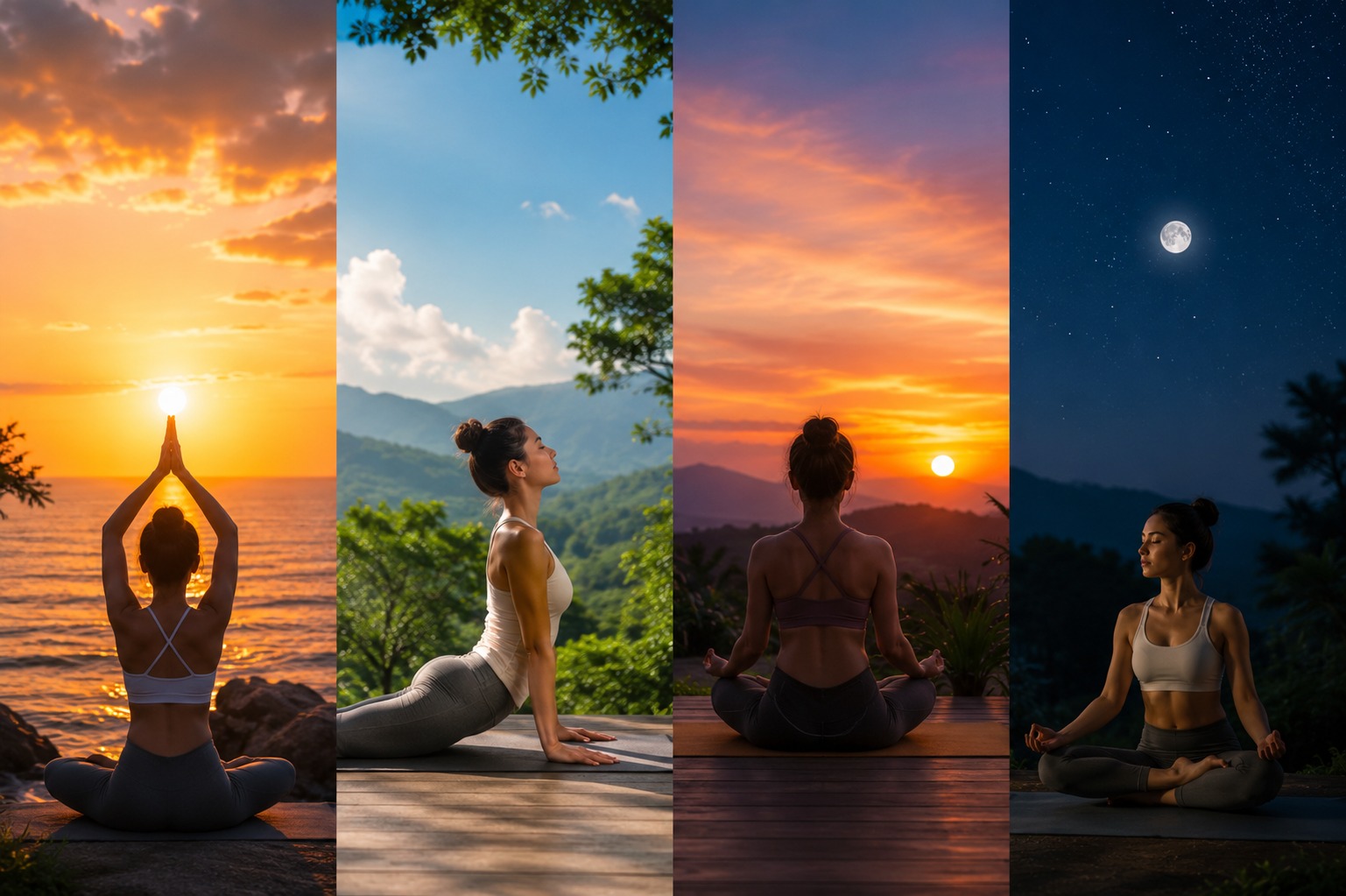
According to yogic tradition, the day can be broadly divided into four significant phases: Brahma Muhurta, Sunrise, Noon, and Sunset. Each phase carries a distinct quality of energy and influences different activities.
For spiritual growth, meditation, and inner development, Brahma Muhurta—the period approximately 90 minutes before sunrise—is considered the most auspicious time. This tranquil phase is believed to support mental clarity, concentration, and heightened awareness.
Early morning, in general, offers ideal conditions for yoga practice. The air tends to be fresher, oxygen levels are relatively higher, and the environment is quieter. The body and mind are naturally more receptive, making it easier to cultivate focus and discipline.
Midday, however, is generally not recommended for yoga practice. This is often the time when digestion is active following meals, and the body’s energy is directed toward metabolic processes. Additionally, higher temperatures during the day may contribute to fatigue and dehydration, making vigorous practice less comfortable.
The evening presents another favourable opportunity for yoga. By this time, most daily responsibilities have been completed, allowing practitioners to engage more mindfully. Since meals are usually well-digested, the body can comfortably accommodate gentle movement, stretching, and relaxation practices.
Why Morning Yoga Is Highly Recommended
The early hours of the day possess a unique sense of calmness and freshness. Practicing yoga in the morning helps establish a positive tone for the day while enhancing concentration and self-awareness.
Ayurveda recommends waking approximately one to one-and-a-half hours before sunrise to engage in practices such as yoga, pranayama, and meditation. The atmosphere during this period is believed to support mental balance, emotional stability, and spiritual growth.
Modern research also highlights several benefits of morning yoga:
Recommended Morning Practices
After an overnight fast, the body is generally lighter and more prepared for dynamic movement. Morning sessions can include:
Generating vitality and energy in the morning often influences productivity and enthusiasm throughout the day.
Benefits of Evening Yoga Practice
While mornings are traditionally preferred, evening yoga offers its own unique advantages.
After a demanding day, yoga can serve as a bridge between activity and rest. It helps release accumulated physical tension, mental stress, and emotional fatigue, allowing the practitioner to return to a state of balance.
Renowned yoga teacher B.K.S. Iyengar often emphasized the value of evening practice for relieving the strain and stress of daily life. Evening yoga creates an opportunity to unwind, reconnect with oneself, and prepare the body for restful sleep.
Research has shown that yoga practiced in the evening may improve sleep quality and help manage symptoms of insomnia. Some studies also suggest that physical performance and exercise capacity can be higher later in the day, allowing practitioners to engage more comfortably in movement-based sessions.
Recommended Evening Practices
Evening sessions are best suited for calming and grounding practices, including:
Poses such as Wide-Legged Forward Fold, Garland Pose, Seated Spinal Twist, Goddess Pose, and Happy Baby Pose can be particularly beneficial. Concluding the session with deep relaxation techniques enhances recovery and promotes quality sleep.
It is generally advisable to avoid highly stimulating backbends and intense chest-opening postures late in the evening.
Important Guidelines for Practice
If You Practice in the Morning
If You Practice in the Evening
Choosing the Right Time for You
The ideal time for yoga ultimately depends on your lifestyle, responsibilities, and personal rhythm.
For some, mornings may feel rushed due to work, family commitments, or household responsibilities. In such cases, an evening practice may be more realistic and sustainable.
Others may find early mornings to be the only uninterrupted time available, making it an excellent opportunity for yoga, pranayama, and meditation.
Both traditional yogic wisdom and modern research acknowledge the benefits of morning and evening practice. Each offers unique advantages for physical health, mental well-being, and inner balance.
While practicing twice daily would be ideal, it may not always be practical. What matters most is consistency. Choose a time that aligns with your routine and allows you to practice regularly without feeling pressured or rushed.
Final Thoughts
Yoga is much more than physical exercise. Its benefits extend beyond the body, influencing mental clarity, emotional resilience, and overall quality of life. Whether practiced at sunrise or sunset, yoga becomes truly effective when approached with sincerity and consistency.
There may be days when your schedule feels overwhelming and your practice is shorter than usual. On such days, remember that even a few mindful minutes on the mat are valuable. The key is not perfection, but regularity. Ultimately, the best time to practice yoga is the time you can commit to consistently. When practiced with awareness and dedication, yoga naturally cultivates greater health, harmony, and balance in everyday life.
Category :
Share :